Two Brookhaven homes can sit a mile apart and sell hundreds of thousands of dollars apart. If you have tried to compare prices across Historic Brookhaven, Lynwood Park, or the Dresden corridor, you know how fast the numbers shift. You want a clear, local way to read those differences so you can price confidently as a seller or make a smart offer as a buyer. This guide breaks down Brookhaven’s micro-areas, explains what drives values by street and product type, and gives you a simple framework to evaluate a specific home. Let’s dive in.
Brookhaven’s citywide price picture
Recent sources put the “typical” Brookhaven home value in a broad, but useful, range. Zillow’s local index in late January 2026 shows a typical value around the low seven hundreds, while MLS-based snapshots in the same period show medians closer to the high seven hundreds to low eights. The U.S. Census 2020–2024 estimate lists the median value of owner-occupied homes in Brookhaven at roughly $692,700, a steady long-run baseline you can use for context (U.S. Census QuickFacts).
Market pace matters too. In January 2026, Brookhaven’s sale-to-list ratio sat near the mid- to high-90s and only a minority of homes sold above list. Days on market ran about two to three months on average, which influences your negotiation strategy and expectations. Always match any citywide stat to the month and source you use, since methods and timing differ and can shift the headline number.
Why values vary by area
Several factors create wide price differences between Brookhaven micro-areas. Focus on these when you compare homes:
- Proximity to village hubs. Walkability to Dresden Drive restaurants and retail, plus access to Town Brookhaven, can raise demand. Ongoing projects like Parkside on Dresden strengthen the village core and pedestrian links, which supports nearby home values over time (Parkside on Dresden).
- Transit access. The Brookhaven/Oglethorpe MARTA station offers convenience, but impacts on value vary by distance and product type. Research shows rail access can add value in many settings, but homes immediately adjacent may face noise and parking trade-offs (transit value research summary).
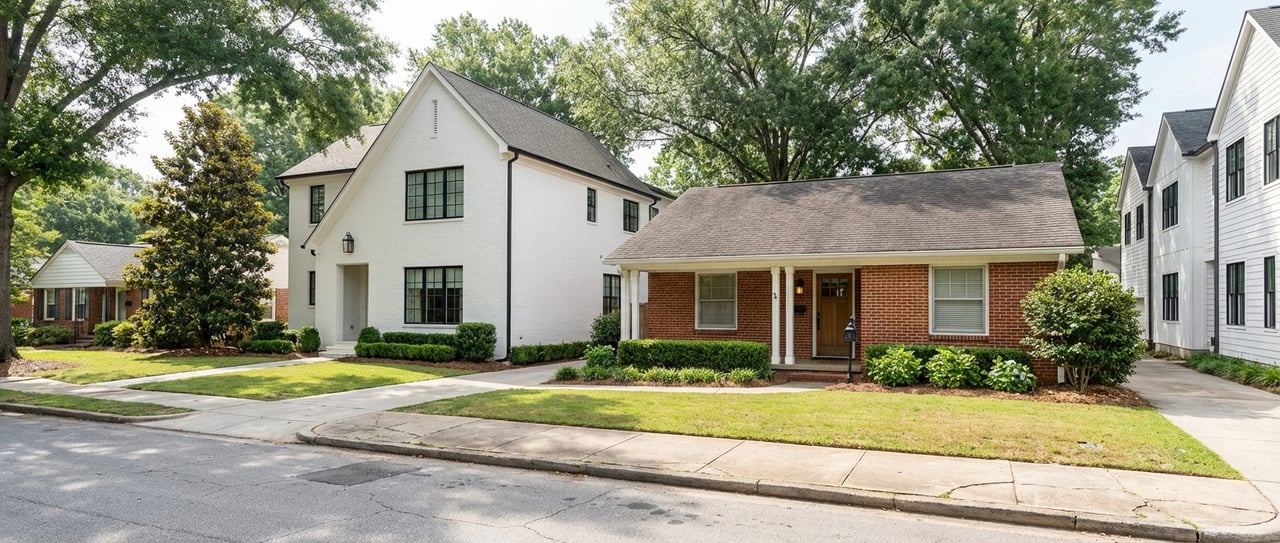
- Age of construction and infill. Many streets feature 1950s–1960s ranches and bungalows beside 3,000–4,500 sq ft new builds. That teardown-and-rebuild cycle creates large spreads on the same block.
- Product type. Single-family homes price differently than townhomes or condos. Compare like to like within the same micro-area.
- Parks, schools and lot size. Larger lots, nearby parks and specific school assignments are common reasons buyers pay more. Treat them as situational premiums and use local comps to quantify the impact.
Values by Brookhaven micro-area
Brookhaven names and boundaries can vary by site or MLS feed. Define the micro-area you are talking about before you compare prices.
Historic Brookhaven: top tier
Historic Brookhaven sits at the top of the local spectrum, with older estate architecture, large lots and a prime location near the Peachtree corridor. Zillow’s neighborhood index shows values above 1.8 million in the January 2026 snapshot. MLS medians in some months may read lower due to sample size and boundaries, but directionally this area leads on price. Expect competitive pricing for renovated classics and high-spec new construction.
Lynwood Park: strong demand
Lynwood Park has seen high recent medians, with January 2026 neighborhood figures topping one million in MLS-based snapshots. You will see a mix of original homes and newer infill on intact lots. Proximity to village amenities and ongoing investment nearby supports pricing. Compare per-square-foot for newer builds to avoid overstating premiums.
Ashford Park, Drew Valley, Brookhaven Fields
These linked neighborhoods are the heart of Brookhaven’s mid-century bungalow and ranch stock. They have been steady teardown-and-infill zones for years. Zillow’s index places Ashford Park and Drew Valley in roughly the high $800s to low $900s range in early 2026, with wide spreads between original 1950s cottages and new 4,000+ sq ft builds on the same street. When you comp a home here, separate older renovated houses from recent new construction and note lot size.
Brookhaven Village (Dresden/MARTA corridor)
The Dresden Drive corridor offers the most mixed inventory: condos, smaller townhomes, mid-rise buildings and some single-family pockets. Median prices often read lower because condo and townhouse product dominate the tally. That said, updated townhomes and renovated bungalows within easy walking distance of dining and retail can command a premium. Watch the impact of new mixed-use like Parkside on Dresden, which will add multifamily and strengthen the village draw over time (Parkside on Dresden).
Peachtree corridor and Town Brookhaven
Close to Buckhead retail and services, the Peachtree corridor and Town Brookhaven pull premium demand. You will find high-end single-family pockets alongside luxury condos and multifamily buildings. For accurate comp work, isolate single-family sales within the same pocket and adjust for lot size and finish level. Condo buyers should focus on building age, amenities, fees and recent closed sales in the same stack or tier.
Parks-edge neighborhoods: Hampton Hall, Brittany, Murphey Candler
Homes near Murphey Candler Park and in adjacent neighborhoods often sit on larger lots and offer easy park access. Zillow’s neighborhood indices place these above many mid-city pockets but below Historic Brookhaven. Value patterns depend on the specific street, condition and whether the lot can support expansion. Note the school assignment and walkability when you compare within these areas.
How to price or value a Brookhaven home
Use this simple framework to assess list price versus offer price across micro-areas:
- Define the exact micro-area. Use a consistent neighborhood name and boundary (MLS or city GIS) so you are not mixing areas by accident.
- Match product type and recency. Start with closed comps from the past 6–12 months that match product type (single-family vs townhome vs condo). In fast-moving pockets, weight the most recent sales more heavily.
- Read local market signals. Check the sale-to-list ratio, days on market and percent of sales over list for the same micro-area. Brookhaven aggregated around the mid- to high-90s sale-to-list in Jan 2026, with only a small share closing above list. That gives you a negotiation baseline for a typical home.
- Adjust thoughtfully. Account for lot size, age and effective condition, bed/bath count, finished square footage, major renovations, walkability to Dresden or Peachtree, and school assignment. Note why each adjustment matters. For deeper guidance, see this overview on selecting comps and explaining adjustments (how appraisers choose comps).
- Watch product-mix shifts. New multifamily along Dresden can temporarily change buyer flow in the immediate corridor, while boosting demand on nearby quieter streets. Track how many similar homes are competing right now.
- Document the source and date. When you cite a number (for example, a neighborhood index in January 2026), name the source and month. For an active offer or list, lean on recent MLS comps and, when needed, a local appraisal.
Quick product-type comparisons
Brookhaven’s price story changes fast when you switch product types. Keep these patterns in mind:
- Older bungalows and ranches. Smaller footprint and lots. Attractive to renovation buyers or builders. Lower absolute prices than new builds on the same street, but renovated originals can rival new construction on a per-square-foot basis when finishes are strong.
- Infill and new construction. Larger floorplans and modern layouts. Absolute prices are higher, but the premium over resales has narrowed nationally in 2024–2025 as builders offered incentives and resale inventory stayed tight. The spread varies by street and finish level, so compare per-square-foot pricing to recent local sales (price gap trend overview).
- Townhomes and condos. Lower absolute prices, different buyer pools and amenity trade-offs. In walkable locations near Dresden or Town Brookhaven, updated townhomes can sell at a clear premium to older units farther out. For condos, building age, fees, renovations and parking drive most differences.
What this means for you
If you are buying, define the micro-area that fits your lifestyle first, then lock in the product type. That will keep your search focused and help you spot value when a home in your target pocket lists below recent comps. Use the sale-to-list ratio and days-on-market trend in that same area to guide your opening offer and timeline.
If you are selling, your net depends on two things you control: presentation and precision. Price off the most recent, like-kind comps within your micro-area and address any condition gaps buyers will notice. Strategic pre-sale improvements and polished marketing help your home compete with nearby new builds and renovated listings, especially in areas with wide spreads between originals and infill.
Ready to map your home to the right micro-area comps and a winning plan? Reach out to Susan Powell for a data-driven valuation, a room-by-room prep strategy and a Compass-powered listing plan that showcases your home at its best. Connect with Susan Powell to get started.
FAQs
Does being in the Dresden village always raise price?
- Not always. The corridor skews toward condos and townhomes, which lowers the area median, while single-family homes that are truly walkable often command a premium. The effect depends on product type and finish level. New mixed-use like Parkside on Dresden is expanding retail and walkability, which can support values over time (project details).
How much more does new construction cost than an older bungalow in Brookhaven?
- There is no single percentage. National trends show the new-construction premium narrowed in 2024–2025 as builders used incentives and resale prices stayed firm. Locally, compare recent per-square-foot sales for similar homes on nearby streets to find the true spread (price gap trend overview).
Does living near the Brookhaven/Oglethorpe MARTA station boost value?
- It depends on distance and product type. Many studies find positive effects at moderate distances, while homes immediately adjacent may face noise or parking trade-offs. In Brookhaven, station-area investment supports demand, but use local comps rather than a blanket premium (transit value research summary).
What is the median home value in Brookhaven right now?
- Across late 2025 and January 2026 snapshots, typical values and medians generally ranged from the high $600s to low $800s, depending on data source and method. Always match the figure to its month and provider.
What is the best way to estimate my home’s value on my street?
- Define the micro-area precisely, use 6–12 month closed comps for the same product type, adjust for lot, size, finish and walkability, and document your logic. For a defensible number, pair MLS comps with a local appraisal approach (how appraisers choose comps).